Happiness, Optimism and Low Expectations
Posted on June 20, 2011 1 Comment
Last week I read this fantastic article in TIME covering some fascinating points on optimism and happiness and how the brain is wired. In it was a side story about ways to “get and stay happy” with Denmark being highlighted stating, “Be Like the Danes, Keep Expectations Realistic,” showing a greedy child looking wildly at a huge multi-layered burger.
In the article, which talks about optimism, there are some really interesting points. I personally took note of the following:
“To make progress, we need to be able to imagine alternative realities — better ones — and we need to believe that we can achieve them. Such faith helps motivate us to pursue our goals.”
“…memories are susceptible to inaccuracies partly because the neural system responsible for remembering episodes from our past might not have evolved for memory alone. Rather, the core function of the memory system could in fact be to imagine the future — to enable us to prepare for what has yet to come. The system is not designed to perfectly replay past events, the researchers claimed. It is designed to flexibly construct future scenarios in our minds. As a result,
memory also ends up being a reconstructive process, and occasionally, details are deleted and others inserted.”
“While healthy people expect the future to be slightly better than it ends up being, people with severe depression tend to be pessimistically biased: they expect things to be worse than they end up being. People with mild depression
are relatively accurate when predicting future events. They see the world as it is. In other words, in the absence of a neural mechanism that generates unrealistic optimism, it is possible all humans would be mildly depressed.”
“…sometimes we regret our decisions; our choices can turn out to be disappointing. But on balance, when you make a decision — even if it is a hypothetical choice — you will value it more and expect it to bring you pleasure. This affirmation of our decisions helps us derive heightened pleasure from choices that might actually be neutral. Without this, our lives might well be filled with second-guessing. Have we done the right thing? Should we change our
mind? We would find ourselves stuck, overcome by indecision and unable to move forward.”
“…Once we are made aware of our optimistic illusions, we can act to protect ourselves. The good news is that awareness rarely shatters the illusion. The glass remains half full. It is possible, then, to strike a balance, to believe we will stay healthy, but get medical insurance anyway; to be certain the sun will shine, but grab an umbrella on our way out — just in case.”
See the entire article here: http://www.time.com/time/health/article/0,8599,2074067-1,00.html

Those rose-colored glasses? We may be born
with them. Why our brains tilt toward the positive (in spite of all the
negative)
with them. Why our brains tilt toward the positive (in spite of all the
negative)
NY Times: Extra Vitamins? A Great Idea, Except in Denmark
Posted on June 20, 2011 Leave a Comment

There are many debates over the need to take vitamin supplements, with most advisors stating that if you eat a healthy diet, there is no need for them. Denmark obviously agrees. The recent NY Times article highlights this point, as well as another reason why the choice for products is limited here, and why it’s so restrictive for non-Danish companies to import food — food that is fortified that is.
While I’m personally no fan of Marmite and have absolutely no desire to even try it — the point here is more about this weariness or attitude of skepticism. As a foreigner here, I can say this attitude permeates way beyond that of the amount of Vitamin B added to cereal. Also, it seems like a mixed message — it’s OK for Denmark to export pork, including bacon and spare ribs, and other animal products that are far more dangerous to a person’s health, yet will not allow a cereal that’s been fortified with vitamins because they believe it’s toxic?
My question is how can products that have been approved by the American Food and Drug Administration, or a similar governmental body in Britain — things like cereal, for example, be considered safe enough for a country with over 300 million people but too dangerous for a country of five? I would also just add that instead of looking at the minerals and vitamins added, perhaps another measure should be sugar, fat and salt levels — of all products both in Denmark and imported. That would be a far better use of resources and way to look out for the consumer.
Read the full article here:
June 16, 2011
New York Times
Extra Vitamins? A Great Idea, Except in Denmark
By JOHN TAGLIABUE

Love Smushi at the Royal Cafe
Posted on February 16, 2011 Leave a Comment
Always a treat, smushi at the Royal Cafe. What is a smushi you ask? A smushi is an invention taking smørrebrød (traditional Danish open-faced sandwiches) and creating sushi-ish size portions that are sculpted into true pieces of art. This time around, I was thrilled to see the “Fodor’s Choice” sticker on the front door…since I was the one that selected the establishment for a “Fodor’s Choice” distinction in the “First Edition Fodor’s Scandinavia,” published in 2009. I also wrote about smushi and interviewed owner Rud Christiansen and his partner Lo Østergaard. Here is an excerpt from the article written for Copenhagen Exclusive Magazine:
“The idea with smushi is to create smaller portions so one can sample more varieties and really get a taste of Denmark,” said owner Rud Christiansen. Christiansen and his partner and interior stylist Lo Østergaard have custom designed the café from floor to ceiling with designs from Holmegaard, Royal Copenhagen, Bang & Olufsen and Arne Jacobsen, just to name a few. Part Danish design museum, part shop and café, “the funny, funky, baroque, rock and roll-style café is a showcase for promoting Danish society and food,” Christiansen said. The new smushi and Danish café concept is so popular that franchises in Singapore, Seoul, Taipei and Tokyo are set to open next year. Christiansen also talked of looking for space in the U.S. In addition, smushi-making has been added to the official smørrebrød curriculum at Copenhagen’s culinary school. It will be taught as somewhat of an art form, like making sushi is, where there is an architectural approach to the design and assembly.

Scallops with saffron beurre blanc topped with a heart-shaped red beet in a puff pastry 🙂

“Egg Royal” with salmon and cream of herbs shaped into a triangle with leeks.

Codroe with cauliflower remoulade smushi and Potato tureen with roasted chestnuts smushi
The delicious lunch was enjoyed with a lovely cup of Pai Mu Tan white tea aka Baii Mudan or White Peony tea, made with ” leaves and flowers from the wild trees.” It was earthly good!
New Jobsite for “Highly-Skilled” Workers in Denmark
Posted on February 14, 2011 Leave a Comment
In response to increasing competition for attracting and retaining foreign talent (see “Denmark’s Competitiveness Threatened – Reaching Critical Limits“), The Ministry of Employment, in cooperation with a number of other government institutions, and a newly formed group called the “Consortium for Global Talent” consisting of representatives from major Danish global corporations including A.P. Moller-Maersk, Carlsberg, Danske Bank Group, D O N G Energy, The LEGO Group, Novo Nordisk and Vestas Wind Systems, has launched a new recruiting website for connecting Danish companies with international experts or those that are categorized as “highly skilled” workers.
The website, launched last November as part of the workindenmark.dk website, is intended to connect Danish companies with foreign job seekers. The site can be found at www.workindenmark.dk / highly-skilled. It is said to have the largest number of English jobs for highly skilled professionals.
The site features job listings and a CV database, as well as a considerable amount of information about working and living in Denmark. In addition, recruitment information and jobs assistance is available from workindenmark centers located in Aarhus, Odense and Copenhagen. Workindenmark.dk is backed by a number of governmental institutions including The Ministry of Economic and Business Affairs, Ministry of Foreign Affairs, Danish Ministry of Science, Technology and Innovation, and The Danish Ministry of Education, Welfare, and Taxation.
Finnish Brand Marimekko Teams up with Converse
Posted on February 12, 2011 1 Comment
Converse and Marimekko have partnered on a women’s specific collection for spring 2011 combining Converse’s most popular silhouettes – such as Chuck Taylor All Star High and Ox – with Marimekko’s signature pattern designs. The designs will be available starting from February 2011 at premium retail outlets, selected Marimekko stores and at www.converse.com.
Check it!
About Marimekko
Marimekko is a leading Finnish textile and clothing design house which through its timeless and individual, practical and beautiful products wants to create aesthetic experiences for every moment in life for people of all ages. The array of Marimekko design embraces household goods ranging from furnishing fabrics to tableware as well as clothing, bags, jewellery and other accessories. When Marimekko was founded in 1951, the unparalleled patterns and colours of its printed fabrics gave it a strong and unique identity. In 2009, Marimekko’s net sales were EUR 72.5 million, of which international sales accounted for 27.3%. Marimekko products are available in roughly 40 countries. The company employs around 370 people. Marimekko’s shares are quoted on NASDAQ OMX Helsinki Ltd. For more information, visit Marimekko on the web at www.marimekko.com .
Young Estonian Wins Scandinavian Fashion Design Award
Posted on February 7, 2011 Leave a Comment

The Designers’ Nest Award show, held last week as part of Copenhagen Fashion Week, presented collections by graduate students from seven Scandinavian design schools including Danmark’s Designskole in Copenhagen, Designskolen in Kolding, TEKO in Herning, Beckmanns College of Design in Stockholm, Aalto University School of Art and Design in Helsinki, the Iceland Academy of the Arts and the Textilhögskolan in Borås.
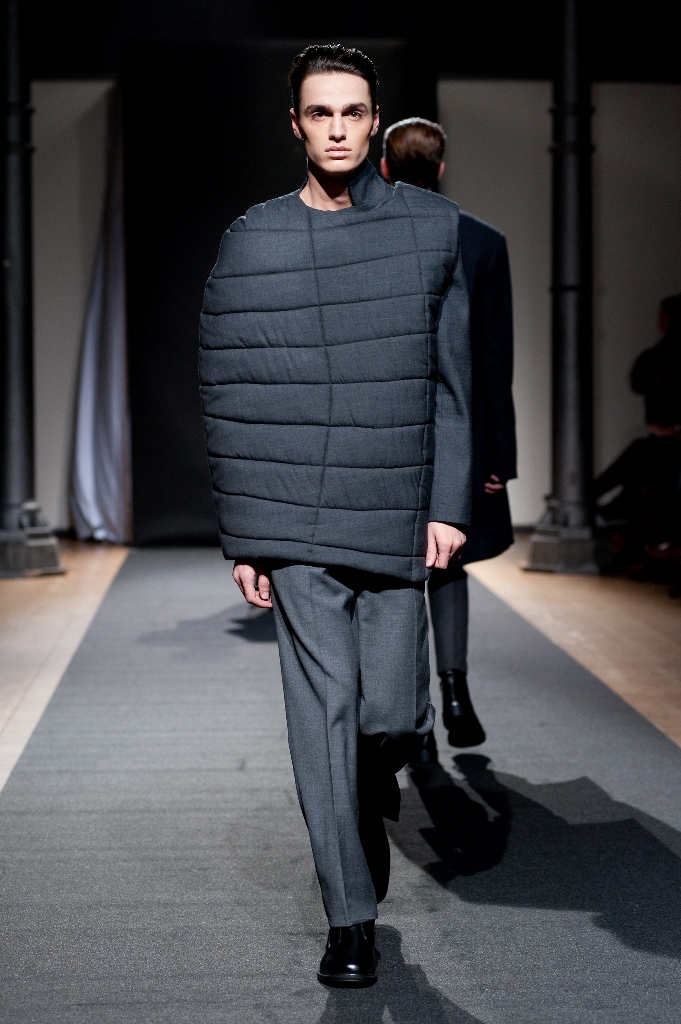
This year’s winner is Magnus Löppe, a 25-year old design student from TEKO design school in Herning from Estonia. The first runner-up was Stephanie Sikkes, also from TEKO, and second runner-up was Stefan Autzen from Danmarks Designskole.
Winner: Magnus Löppe

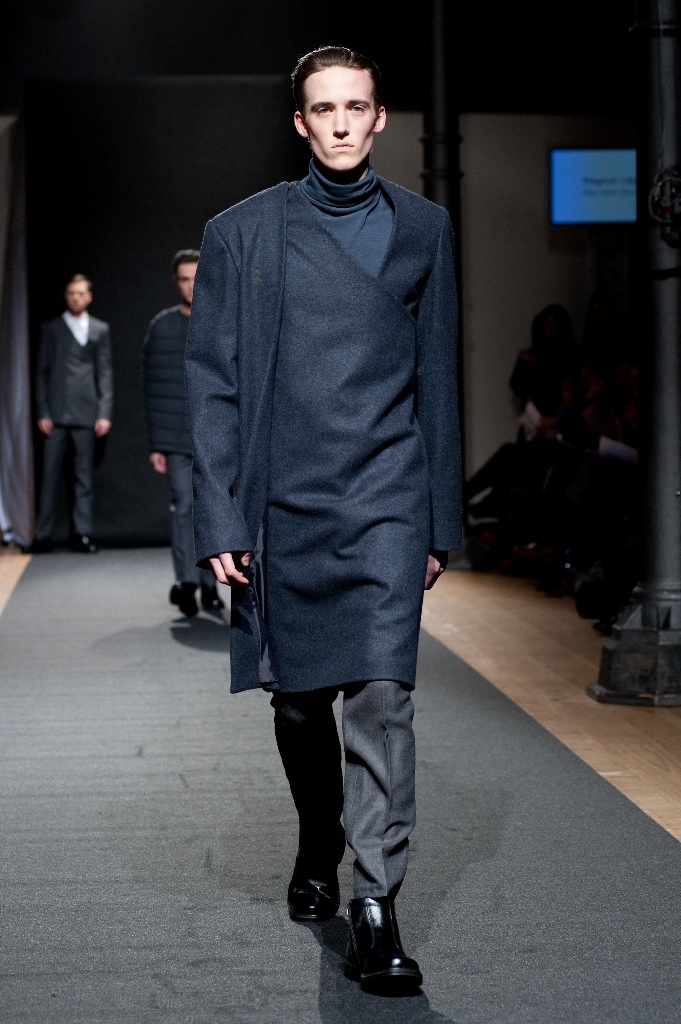
First Runner Up: Stephanie Sikkes

Second Runner-Up: Stefan Autzen

The Designers’ Nest Award was awarded for the first time in February 2005, and was created to identify the most skilled and promising design student among the top design schools in Scandinavia. The winner receives an award created by a Danish designer and a cash prize of DKK 50,000, helping them establish themselves in the world of fashion. HRH Crown Princess Mary is patron of the award, and actively supports and promotes the initiative with her attendance each season.
The panel of judges this year included:
Tom Steifel-Kristensen – Creative Director and Fashion Expert
Cecilie Christiansen – Editor-in-chief at Elle DK
Alberto Caselli – Fashion Editor at Sport & Street
Ike Rust – Senior Menswear Tutor at Royal College of Art
Takeharu Sato – Fashion Director at Monocle
Tom Steifel-Kristensen presented the prize to the winner.
ATTN Expats in Denmark: Survey Participants Wanted
Posted on January 22, 2011 Leave a Comment
Expats & Living Abroad
Samantha Barber, a third-year degree student studying Graphic Design in the UK, is looking for survey participants for her study focussing on ‘Expats and living Abroad.’
She is currently inviting expats to participate in her project by answering a short online questionnaire on her blog: www.samanthabarber.com/expat. The results of the survey as well as interviews which she plan to carry out with expats will form the basis for her study over the next 6 months. Interested parties can sign up to receive updates on the project and can even be part of a review panel for design solutions she proposes.
Mom Swap: Comparing the UK to Denmark
Posted on January 12, 2011 Leave a Comment
I just came across this fascinating article in The Guardian comparing the difference between Denmark and the UK in terms of childcare and lifestyle for working parents. If you’re curious about the differences between the two countries or even just about the Scandinavian social welfare system as it relates to childcare and education, this is an excellent write-up.
Is it better to bring up kids in Denmark?
Scandinavia consistently comes out tops in the family-friendly stakes, but is it really any healthier raising a family there than in the UK? Lucy McDonald swapped places with Danish mum of three Nina Kragh to find out
 Laura Stadler Consulting